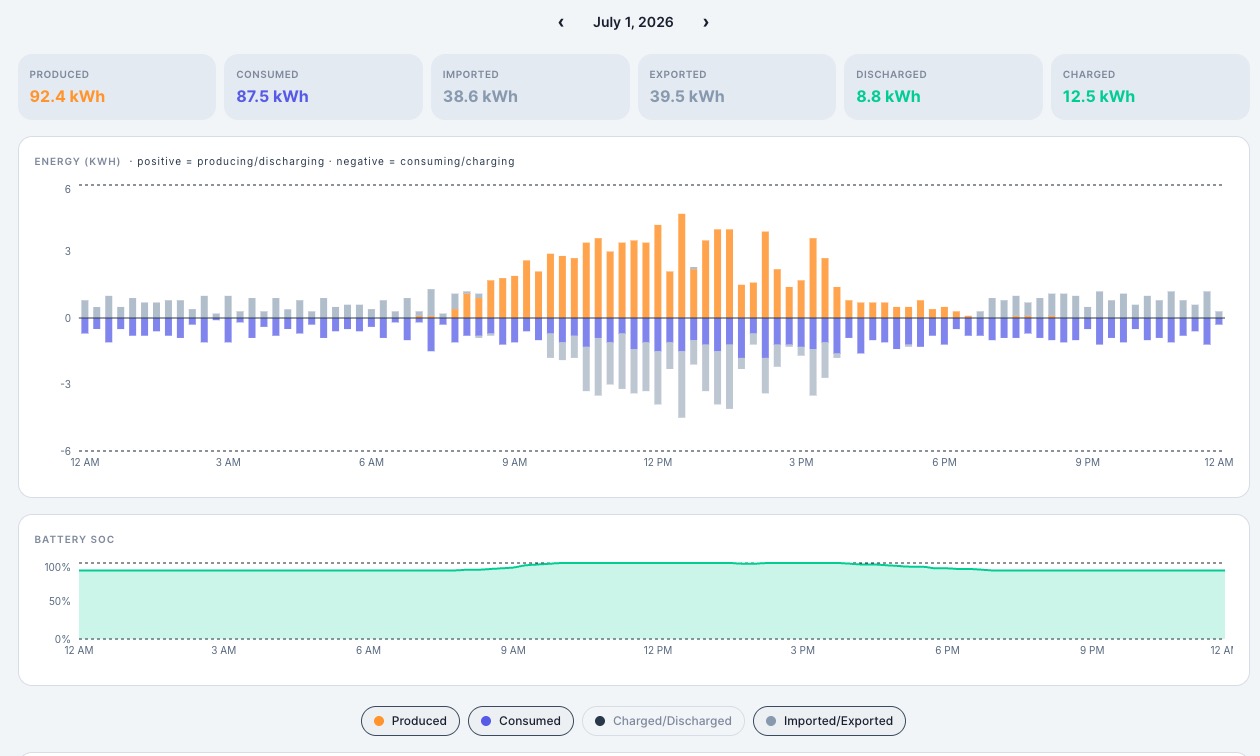
Self-sufficiency is the share of your energy that you supply yourself. Instead of explaining it abstractly, here is a real system's day, broken into the part covered by solar and battery versus the part bought from the grid.
Reading the split
The percentage in the caption is the day's overall self-sufficiency, the single number that best captures the payoff of solar plus storage.
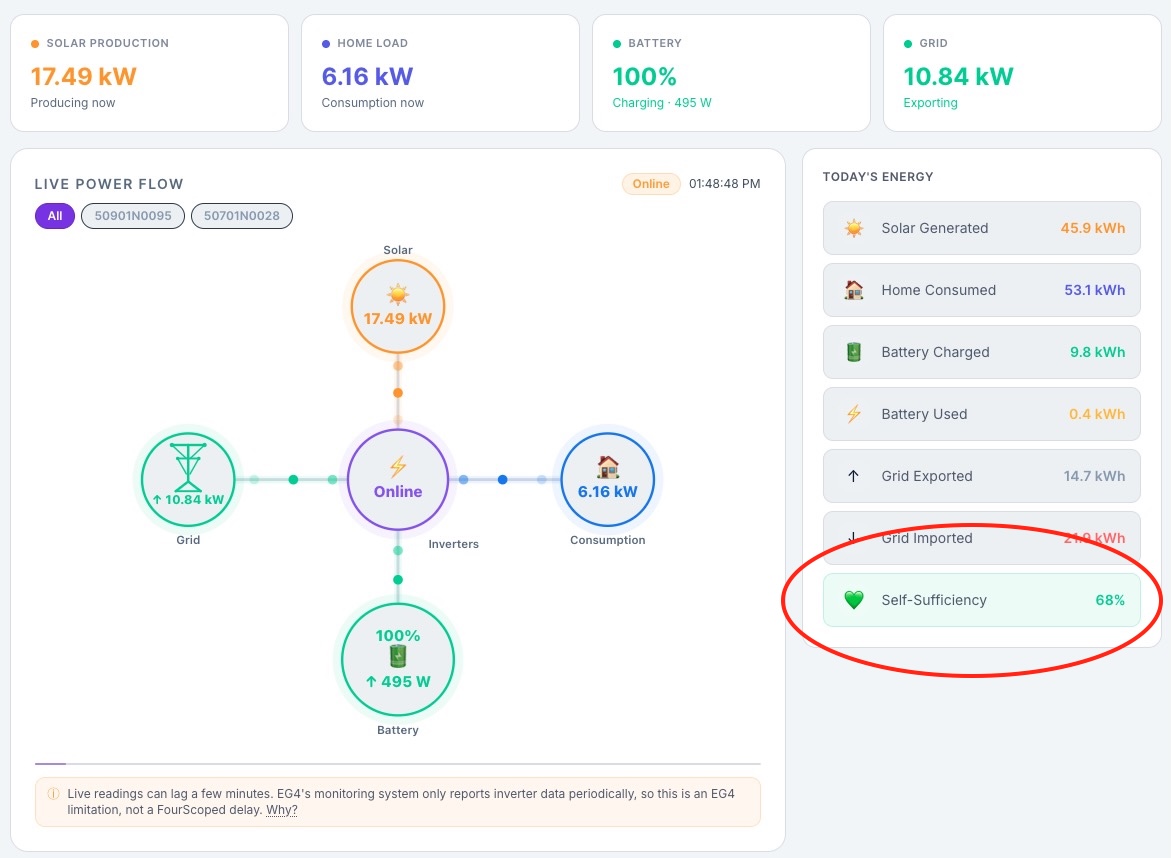
You might ask, why is the percentage so low when this system exported more power to the grid than it consumed. The answer is simple. The home relied on the grid for 32% of its energy overnight. This system is set to discharge the battery to 90% overnight, which is appropriate for situations with full 1-for-1 Net Metering. There is no economic benefit to discharging the batteries to a lower level at night. In fact, there would be an efficiency penalty.
For homes that discharge batteries deeply at night, the self-sufficiency might be greater. For off-grid homes, self-sufficiency is always 100% unless a generator is used to supply part of the energy required.
So the self-sufficiency number is interesting and fun to consider, but it does not always tell the whole story. This system is a net exporter of energy, but it remains reliant on the grid to some extent. The self-sufficiency figure quantifies that,