Parallel systems wire multiple inverters together to handle larger loads and bigger solar arrays. They are powerful and resilient, but they introduce one thing to monitor that single-inverter systems do not: balance.
Why balance matters
In a healthy parallel system, the inverters share load and battery duty roughly evenly. If one unit consistently does more work, it ages faster and runs hotter, and the imbalance can point to a configuration or hardware issue.
What to compare
- Per-inverter output power. Two identical units under the same conditions should track closely.
- Battery charge and discharge split across units.
- Temperatures. A consistently hotter inverter is doing more work or has airflow issues.
How FourScoped helps
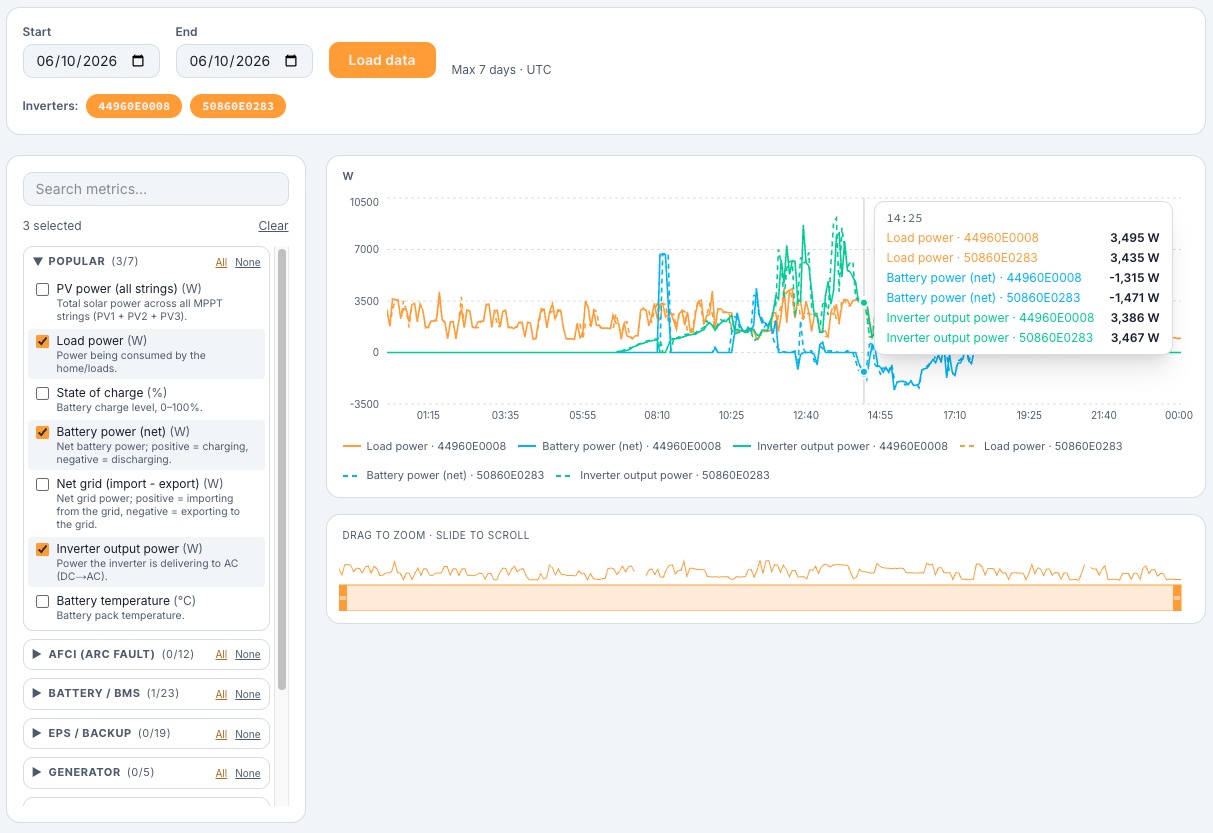
Hyper Mode is built for exactly this. Select multiple inverters and overlay the same metric to compare them side by side across a day or a week. An imbalance that is invisible in the combined total stands out immediately when the units are charted together.
When to investigate
Small, brief differences are normal. A persistent gap, where one unit always carries more, is worth raising with your installer to check parallel settings and connections.